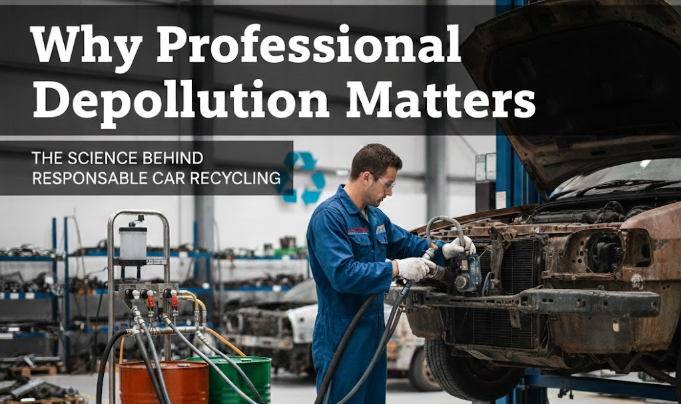
Professional depollution is the systematic process of removing all hazardous substances from a retired vehicle before it is shredded or crushed for scrap metal recovery. This scientific procedure ensures that toxic chemicals, heavy metals, and explosive components are safely contained to prevent permanent damage to local ecosystems. By treating end-of-life vehicles as complex waste streams rather than mere junk, professional recyclers protect the integrity of Brisbane’s soil and water.
The Critical Role of Depollution in Automotive Recycling
Depollution serves as the primary environmental safeguard in the lifecycle of a scrap car, occurring immediately after a vehicle arrives at an authorised treatment facility. Without this intervention, a single vehicle acts as a concentrated source of pollutants that can leach into the groundwater over several decades. Professional depollution transforms a hazardous machine into a clean source of recyclable steel and aluminium.
| Feature | Function in the Process | Environmental Benefit |
| Fluid Extraction | Draining all 6 major automotive liquids. | Prevents soil contamination and water toxicity. |
| Battery Removal | Disconnecting and recycling lead-acid units. | Stops sulphuric acid and lead from leaching. |
| Airbag Neutralisation | Controlled deployment or removal of pyrotechnics. | Eliminates fire and explosion risks during crushing. |
| Mercury Recovery | Removing vintage switches and sensors. | Keeps neurotoxins out of the food chain. |
4 Categories of Toxic Materials Under the Hood
Understanding the chemistry of a car reveals why backyard dismantling is a significant risk to public health. There are 4 specific categories of materials that require industrial-grade handling to remain inert.
1. Hydrocarbons (Fuels and Oils)
Used motor oil and leftover petrol are potent pollutants that destroy soil fertility and aquatic life. A single litre of used engine oil has the capacity to contaminate 1 million litres of fresh water. Professional facilities use vacuum-sealed systems to extract these fluids, which are then sent to refineries for re-refining into new lubricants.
2. Glycols (Coolants and Antifreeze)
Coolants contain ethylene glycol, a substance that is sweet-tasting but highly toxic to domestic pets, wildlife, and humans. If spilled on a driveway, it enters storm drains and flows directly into local rivers. Recyclers capture this fluid in dedicated vats to neutralise the chemical compounds before disposal.
3. Heavy Metals (Lead and Mercury)
Lead-acid batteries and mercury-containing light switches pose long-term neurological risks if they enter the environment. In a professional setting, batteries are stored in acid-proof containers to ensure that any leaks are contained within the facility. The lead is eventually melted down to create 100s of new products, including radiation shielding and new batteries.
4. Halocarbons (Refrigerants)
Air conditioning systems contain gases like R134a or older CFCs that are aggressive greenhouse gases. When a car is crushed without depollution, these gases escape into the atmosphere, contributing to the depletion of the ozone layer. Certified technicians use specialised recovery units to “degas” the system safely.
The Science of Soil and Water Protection
When a vehicle is abandoned or improperly scrapped, the “slow-motion disaster” of chemical leaching begins. Rainwater washes over the engine bay, picking up trace amounts of 5 different pollutants: arsenic, cadmium, chromium, copper, and lead. These metals bind to soil particles, making the ground toxic for gardening or play for 20 to 30 years.
By performing depollution on a concrete, bunded floor (a floor with a raised perimeter to catch spills), recyclers ensure that 100% of these contaminants are captured. This scientific approach to waste management is what separates professional operations from unregulated scrap yards.
Why National Car Removal Prioritises the Environment
Adhering to strict environmental protocols is a hallmark of a responsible recycling partner. National Car Removal Brisbane implements a comprehensive depollution strategy for every vehicle collected across QLD, ensuring that the payout you receive is backed by ethical disposal practices. By combining rapid towing with high-tech dismantling, they protect the Queensland landscape while providing a valuable service to the community.
Target Audience and Situational Relevance
Professional depollution services are relevant for 3 specific groups who need to dispose of vehicles without incurring environmental or legal liability.
-
Eco-Conscious Homeowners: Residents who want to ensure their old car doesn’t leave a toxic legacy in their backyard or local suburb.
-
Property Managers: Individuals dealing with abandoned vehicles on commercial lots where fluid leaks can lead to expensive remediation costs.
-
Insurance and Fleet Firms: Organisations that must prove “Certificate of Destruction” standards were met for written-off assets.
Pros and Cons of Professional Depollution
While professional handling is the gold standard, it is helpful to compare it to the outdated methods of the past.
Pros:
-
Total Liability Coverage: Once the car is depolluted and dismantled by a pro, your legal responsibility for its environmental impact ends.
-
Resource Recovery: It allows for the recycling of 95% of the car’s weight, including glass, plastic, and rubber.
-
Community Safety: It removes the risk of “tyre fires” and “battery explosions” in residential areas.
Cons:
-
Processing Time: Real depollution takes between 30 and 60 minutes per vehicle, meaning a professional cannot simply “crush and go” like illegal operators.
-
Infrastructure Costs: Maintaining vacuum pumps and chemical storage units is expensive, which is why only reputable firms invest in them.
3 Quantifiable Benefits of Responsible Disposal
Specific numbers highlight why this process is essential for a sustainable future. When a car is professionally depolluted and recycled, the following 3 savings occur:
-
95% Energy Saving: Producing aluminium from recycled scrap uses 5% of the energy required to mine bauxite.
-
75% Energy Saving: Recycled steel reduces the need for coal-intensive virgin ore production by three-quarters.
-
2,500kg of CO2: Proper recycling of a single vehicle prevents approximately 2,500kg of greenhouse gas emissions compared to landfilling.
How the Process Works: Step-by-Step
To see how your car is handled, follow these 3 steps of the professional decommissioning workflow.
-
Step 1: Mounting and Security: The car is placed on a specialised rack that allows technicians to access the underside without damaging the fuel tank or lines.
-
Step 2: The “Drain-All” Phase: High-power suction tools pierce the sumps and tanks, extracting every drop of fluid into separate, colour-coded storage tanks.
-
Step 3: Component Stripping: Batteries, tyres, and catalytic converters are removed manually. The catalytic converter is particularly important as it contains precious metals like platinum that require specialised smelting.
Conclusion: A Greener Brisbane Through Science
Professional depollution is not just a cleaning service; it is a vital industrial process that protects our health and our heritage. By choosing a recycler that understands the science of disposal, you ensure that your old vehicle provides a clean slate for the future rather than a toxic burden for the next generation. The small act of selling a scrap car to a professional contributes to a massive reduction in Brisbane’s collective carbon footprint.