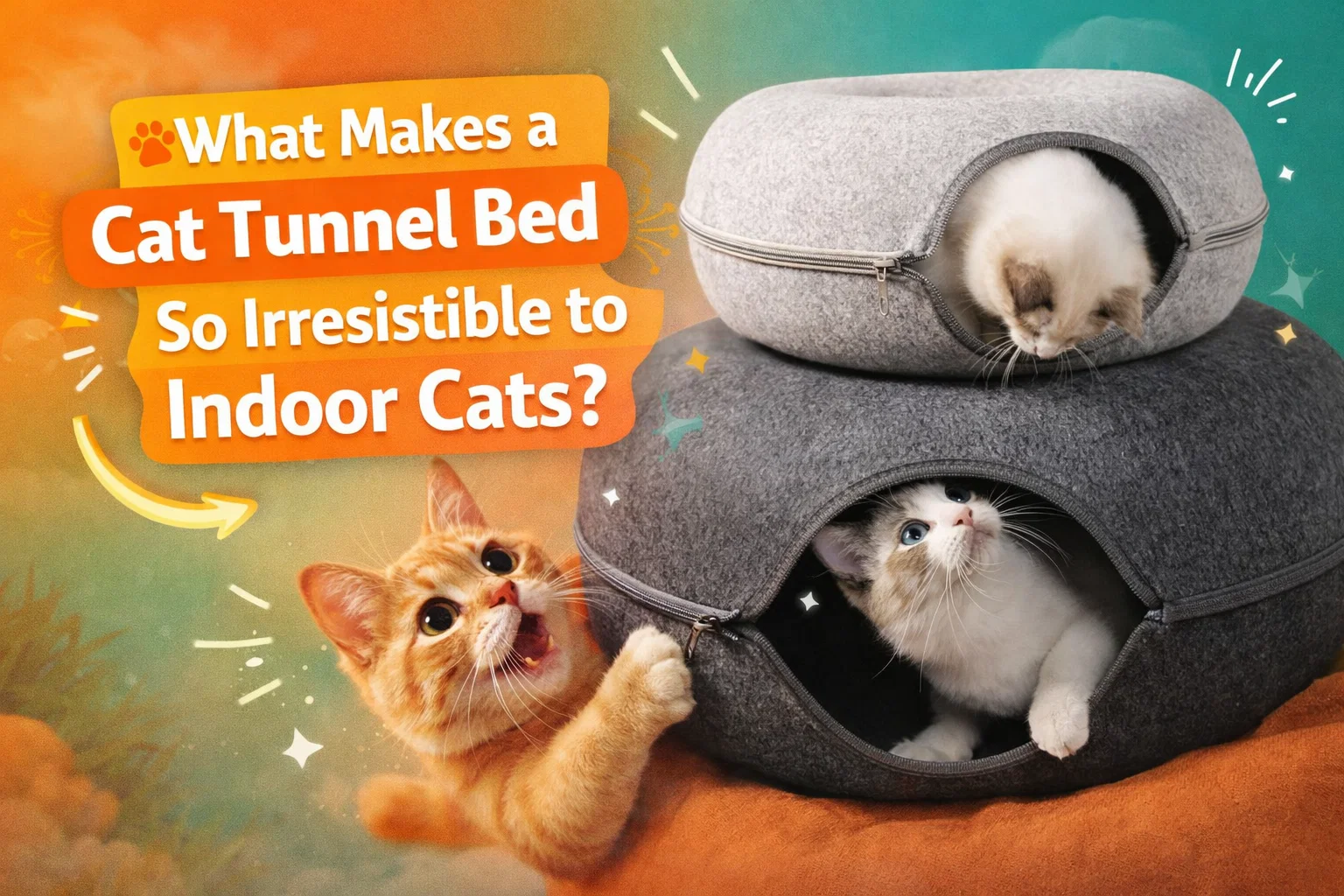
Indoor cats live in a world that is safe, warm, and predictable. While that security protects them from outdoor dangers, it also removes many of the experiences their instincts crave. Hunting, hiding, stalking, and choosing a safe resting place are all natural feline behaviors. When these needs go unmet, boredom and stress often follow.
This is why certain home items instantly capture a cat’s attention. Among them, the Cat Tunnel Bed stands out as something cats don’t just use but genuinely love. From playful kittens to sleepy senior cats, many indoor felines gravitate toward this cozy, enclosed space without hesitation.
Understanding why a cat donut tunnel feels so irresistible requires looking at how cats think, move, and relax. This article explores the instincts, behaviors, and environmental factors that make this type of bed such a natural fit for indoor cats.
Indoor Cats Still Have Wild Instincts
Even the calmest house cat carries the instincts of a skilled hunter. Thousands of years of evolution shaped cats to seek cover, observe quietly, and rest in secure spaces. Indoor living doesn’t erase these instincts it simply changes how they express them.
Cats prefer environments where they can:
- Hide without being isolated
- Observe surroundings without being seen
- Move quickly from rest to play
- Feel protected from behind and above
A Cat Tunnel Bed supports all of these behaviors at once. It offers enclosure without confinement and comfort without exposure. This balance closely mirrors the safe hiding spots cats would choose in the wild.
Why Enclosed Spaces Feel Safe to Cats
Cats feel most relaxed when their backs and sides are protected. Open beds leave cats exposed, which can make them alert rather than restful. This is especially true for indoor cats that share space with people, other pets, or frequent household activity.
A cat donut tunnel surrounds the cat with soft walls while still allowing entry and exit points. This design creates a sense of control. The cat chooses when to hide, when to peek out, and when to move.
That sense of control is a major reason cats feel calm and confident inside tunnel-style beds.
The Power of Circular Design
Cats naturally curl up when they sleep. This position conserves warmth and protects vital organs. Circular beds support this instinctive posture better than flat or rectangular ones.
A Cat Tunnel Bed often combines a round sleeping surface with a tunnel structure. The circular shape provides physical comfort, while the tunnel satisfies the need for enclosure and escape.
This combination explains why cats often knead, spin, and settle more quickly in these beds compared to traditional designs.
Play and Rest in One Space
Cats don’t separate play and rest the way humans do. A place that feels safe enough for sleep often doubles as a place for ambush play.
A cat donut tunnel allows cats to:
- Dash through the tunnel
- Hide and pounce on toys or other pets
- Retreat instantly into a resting position
This flexibility appeals to cats who like to switch between high energy and deep rest without changing locations. It also helps indoor cats stay mentally stimulated in smaller living spaces.
How Tunnel Beds Reduce Indoor Boredom
Boredom is a common challenge for indoor cats. Without new sights, smells, and movement, cats can become restless or disengaged.
A Cat Tunnel Bed introduces variety without chaos. It changes how cats move through a room and gives them a space that feels interactive rather than static. Cats may enter from one side, exit from another, or simply watch their environment from inside.
These small variations matter. They provide mental stimulation without overstimulation.
Stress Relief Through Predictability
Cats thrive on routine. They prefer knowing where to hide, sleep, and observe. When a cat has a dedicated space that consistently meets these needs, stress levels often decrease.
A cat donut tunnel becomes familiar quickly. The scent builds, the shape remains constant, and the experience feels predictable. For anxious cats, this consistency creates emotional security.
Many indoor cats choose the same tunnel bed daily, using it as a personal retreat.
Why Cats Choose Tunnel Beds Over Sofas or Blankets
Cats often nap on sofas, chairs, or laundry piles, but these spots don’t always meet their deeper needs. While soft, they lack enclosure. Noise, movement, or sudden contact can interrupt rest.
A Cat Tunnel Bed offers:
- Defined boundaries
- Reduced exposure to noise and foot traffic
- A sense of ownership
Cats don’t just want softness—they want safety. Tunnel beds provide both.
Multi-Cat Homes and Shared Spaces
In homes with multiple cats, competition for territory can cause tension. Each cat needs a space where it can retreat without being challenged.
A cat donut tunnel offers a neutral, enclosed option that cats can claim temporarily. Because it has multiple entry points, cats don’t feel trapped if another cat approaches.
This design reduces conflict and allows cats to coexist more peacefully in shared environments.
How Tunnel Beds Support Healthy Sleep
Cats sleep between 12 and 16 hours a day. The quality of that sleep matters. Interrupted rest can lead to irritability, overeating, or behavioral issues.
A Cat Tunnel Bed promotes deeper rest by limiting distractions. The enclosed sides muffle sound and reduce visual stimulation. Cats can relax fully without constantly monitoring their surroundings.
Better rest supports better overall behavior and well-being.
Texture and Sensory Comfort
Cats are highly sensitive to texture. Rough or unstable surfaces discourage use, while soft, supportive materials encourage repeated visits.
Many tunnel-style beds feature plush or felted textures that feel warm and secure. These textures mimic natural resting surfaces while remaining comfortable indoors.
A cat donut tunnel often becomes a preferred sleeping spot simply because it feels right to a cat’s senses.
Aging Cats and Physical Support
Senior cats still crave comfort and security, but they may move more slowly or prefer low-impact spaces. A Cat Tunnel Bed provides a supportive, ground-level resting place without requiring jumping or climbing.
The enclosed shape also helps older cats feel protected when their mobility or confidence declines. Many senior cats use tunnel beds as primary sleeping areas.
Kittens and Natural Play Development
Kittens learn through play. They practice hiding, chasing, and pouncing as part of healthy development.
A cat donut tunnel supports these behaviors safely indoors. It gives kittens a place to explore while also teaching boundaries and spatial awareness.
This early exposure to appropriate play spaces can reduce destructive behavior elsewhere in the home.
Why Cats Often Claim Tunnel Beds Immediately
Many cat owners notice that cats take to tunnel beds faster than other furniture. This quick adoption happens because the design aligns with instinctive preferences.
Cats don’t need training to use a Cat Tunnel Bed. They recognize its value immediately—shelter, warmth, and control—all in one space.
When something feels natural, cats accept it without hesitation.
Placement Matters More Than Size
Where a tunnel bed sits in the home affects how often it gets used. Cats prefer locations that offer both visibility and privacy.
Placing a Cat Tunnel Bed near a wall, window, or quiet corner allows cats to observe while remaining hidden. Avoid placing it in high-traffic areas where noise and movement disrupt rest.
Thoughtful placement enhances the bed’s appeal more than size or color.
Cleaning and Familiarity
Cats form attachments through scent. Washing beds too frequently can remove the familiar smells that make a space feel safe.
A cat donut tunnel should be cleaned gently and only when necessary. Maintaining some familiar scent helps cats continue using the bed without hesitation.
Consistency builds trust.
Why Tunnel Beds Fit Modern Indoor Living
As living spaces become smaller, cat furniture must serve multiple purposes. A Cat Tunnel Bed combines sleep, play, and enrichment in one compact design.
This efficiency makes it especially appealing for apartments or homes with limited space. Cats benefit without overwhelming the environment.
Functionality without clutter suits both cats and humans.
Final Thoughts: Comfort That Matches Instinct
Cats don’t choose resting spaces randomly. They seek comfort, safety, control, and stimulation—all shaped by instinct.
A Cat Tunnel Bed meets these needs in a way few other items do. Its enclosed shape, circular comfort, and playful structure align perfectly with how indoor cats think and behave.
The appeal of a cat donut tunnel isn’t about novelty. It’s about familiarity. It feels like a space cats were always meant to have secure, cozy, and entirely their own.
When indoor cats have a place that respects their instincts, they don’t just rest better. They live better.