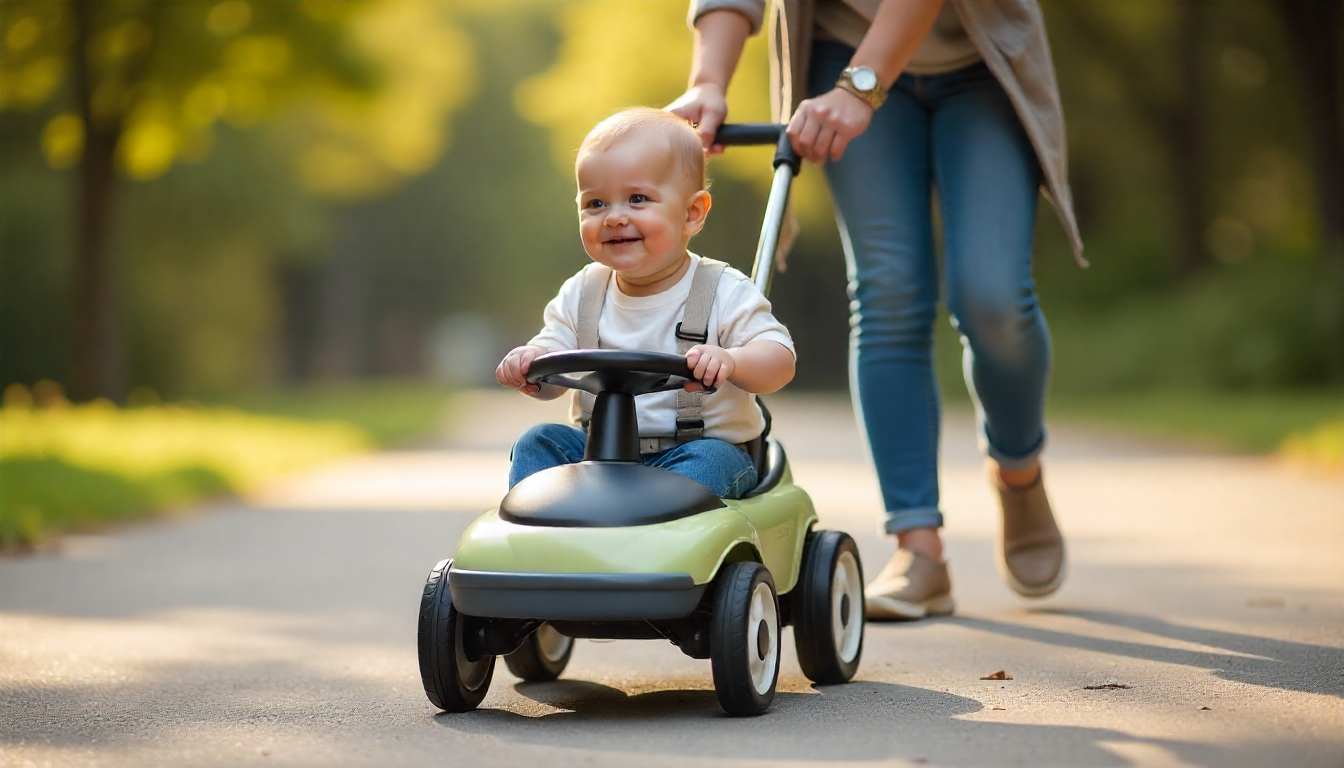
Push cars are often a child’s first experience with independent movement. Parents usually ask one main question before buying: what age is actually safe, and what limits should a push car have? The clear answer is that push cars work best for toddlers who can sit steadily and push with their feet, usually after their first year. Safety depends less on age alone and more on design, size, and how the child uses the ride. Understanding these limits helps parents choose a push car that supports learning instead of creating risk.
When Are Toddlers Ready for Push Cars?
Most toddlers show readiness for push cars between twelve and thirty six months. At this stage, children gain better trunk control, stronger leg muscles, and curiosity about moving on their own. A baby push car suits toddlers who can sit upright without support and push off the ground with both feet.
Age guidelines matter, but developmental signs matter more. Some children walk confidently early, while others take longer. Parents should watch for balance, coordination, and interest in movement rather than relying only on the number printed on a box.
Why Age Labels Alone Are Not Enough
Manufacturers often print age ranges, but these labels cannot account for individual growth. A tall, active toddler may outgrow a baby push car quickly, while a smaller child may need more time. That is why parents should look beyond age and examine height limits, weight capacity, and seat position.
A push car that fits poorly can limit movement or increase the risk of tipping. Correct sizing allows toddlers to keep their feet flat on the ground and stop easily whenever they feel unsure.
Safety Limits Every Push Car Should Have
Push cars should guide toddlers gently, not rush them. Safety limits help keep movement slow and controlled. Important limits include low seat height, stable wheels, and smooth steering. These features protect toddlers while allowing freedom.
This is the only bullet section, kept short as requested:
• Low seating so feet reach the floor easily
• Wide wheelbase that resists tipping
• Steering that turns smoothly without jerks
These limits reduce falls and help toddlers feel secure while learning.
Push Cars vs Baby Walkers for Toddlers
Many parents compare push cars with traditional walkers. While both support early movement, their safety profiles differ significantly.
| Feature | Push Cars | Baby Walkers |
|---|---|---|
| Height | Low to the ground | Elevated frame |
| Control | Toddler controls movement | Wheels move quickly |
| Stability | Wide base supports balance | Can tip or roll fast |
| Learning | Builds leg strength and steering | Encourages passive movement |
| Safety | Easier parent supervision | Harder to stop suddenly |
Push cars offer more controlled movement, making them a safer option for toddlers learning independence.
How Baby Push Car Design Supports Balance
A baby push car encourages toddlers to balance naturally. Since children push with their feet, they learn weight shifting and coordination without relying on external support. This process strengthens muscles used later for walking, running, and climbing.
Design plays a key role here. Rounded edges, firm seating, and smooth steering allow toddlers to explore movement safely. Parents often notice better confidence and fewer falls when children practice balance through push cars instead of stationary toys.
Weight Limits and Why They Matter
Every push car has a maximum weight capacity. Ignoring this limit can affect stability and steering. When a child exceeds the recommended weight, wheels may wobble or the frame may flex, increasing accident risk.
Parents should check weight limits regularly, especially during growth spurts. Choosing a push car with slightly higher capacity allows longer use without compromising safety. This also ensures smoother rides as toddlers grow stronger.
Indoor and Outdoor Safety Boundaries
Push cars work best on flat, even surfaces. Indoors, clear pathways and non-slip flooring reduce hazards. Outdoor spaces, flat pathways, or enclosed play zones ensure safe exploration.
Parents should avoid slopes, stairs, and rough ground. Even well-designed push cars cannot handle uneven terrain safely. Setting clear play boundaries helps toddlers enjoy freedom within safe limits.
Real Life Example of Safe Push Car Use
A parent introduced a baby push car to her fourteen month old daughter who had just started walking. At first, the child used it indoors under supervision. Within weeks, she learned how to push, stop, and turn confidently. The parent noticed improved balance and fewer falls during walking practice.
As the child grew, the push car remained useful until she transitioned naturally into more advanced ride-on toys. This gradual learning reduced fear and built trust in movement.
Why Parents Prefer Push Cars as Early Ride-On Toys
Push cars combine safety and independence, making them a popular choice among toys for toddlers. They allow exploration without motors or pedals, keeping movement slow and manageable. Parents value the balance between freedom and control.
Trusted platforms that offer Toys for Kids in Pakistan often highlight push cars because they suit early development stages and require minimal setup. Their simplicity supports daily play without complex instructions or charging routines.
Conclusion: Choosing the Right Age and Limits for Push Cars
Push cars are safe and helpful for toddlers when age readiness, size, and safety limits align. The best time to introduce a baby push car is when a child can sit steadily and push confidently with their feet. Parents should focus on low seating, stable wheels, and proper weight limits rather than age labels alone.
With clear boundaries and supervision, push cars become tools for confidence and coordination. When chosen carefully, they support healthy movement habits and give toddlers a joyful start toward independence.
Visit for news and updates at playspinnly.com