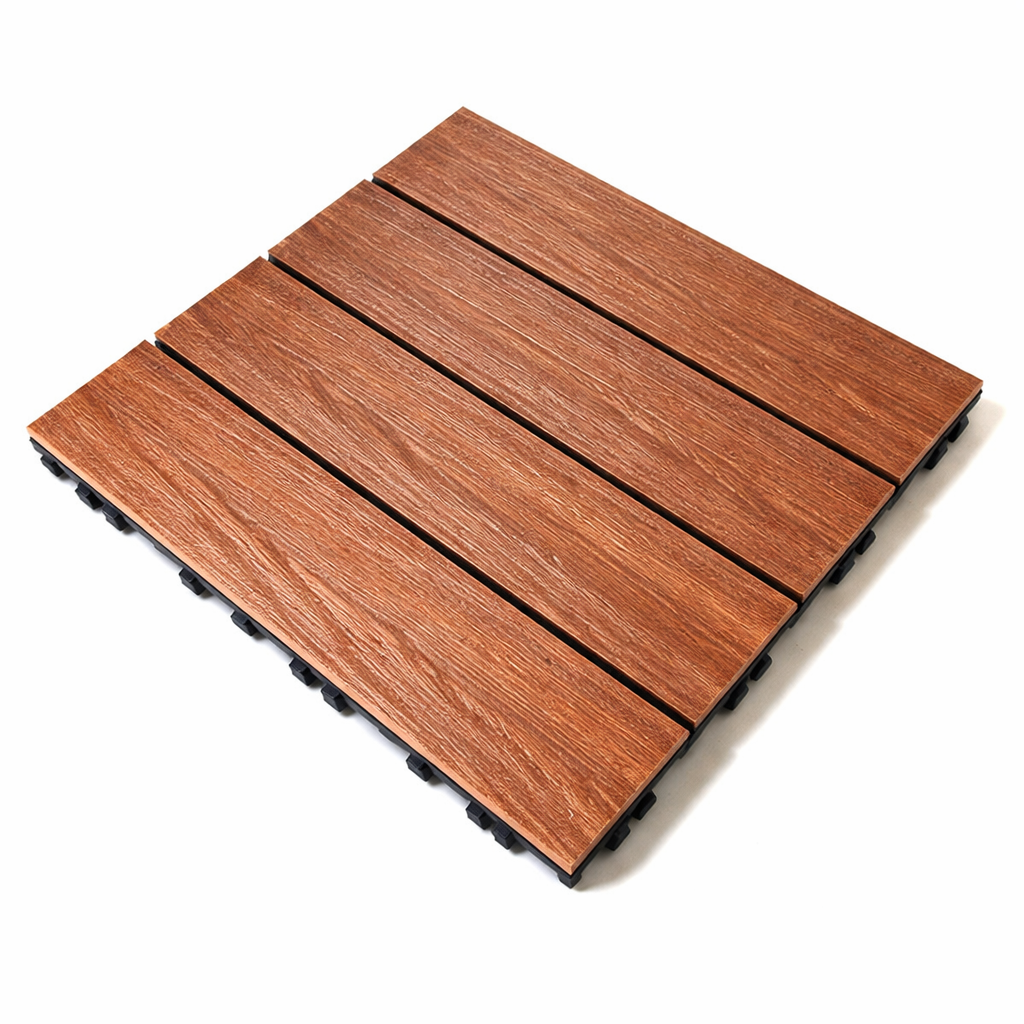
Decking tiles offer a stylish and easy solution for enhancing outdoor spaces like patios, terraces, balconies, and gardens. Whether you opt for the rustic charm of Wooden Decking Tiles or the durability and low maintenance of composite tiles, the installation process is generally straightforward.
Understanding Decking Tiles
Decking tiles are square or rectangular units made of wood, composite, or hybrid materials. These tiles feature an interlocking base system, allowing them to snap together without the need for adhesives, screws, or nails. They are designed to be laid over existing flat surfaces like asphalt, concrete, or compacted gravel.
Benefits of Wooden and Composite Decking Tiles
Wooden Decking Tiles
- Aesthetic Appeal: Provide a natural and warm appearance.
- Eco-Friendly: Often crafted from sustainably grown wood such as teak, acacia, or eucalyptus.
- Customizable: Can be stained, painted, or treated to suit your preferences.
Composite Decking Tiles
- Durability: Resistant to rot, mold, and insects.
- Low Maintenance: No need for sealing or staining.
- Color Variety: Available in a wide range of colors and textures.
- Weather Resistance: Perform well in adverse weather conditions.
Tools and Materials Required
Tools
- Tape measure
- Chalk line or pencil
- Utility knife or handsaw (for cutting)
- Rubber mallet
- Level
- Safety glasses and gloves
Materials
- Decking tiles (wooden or composite)
- Edge ramps or trims (optional)
- Weed barrier fabric (for installations over grass or soil)
- Gravel or sand (for leveling purposes)
- Spacers or shims (for minor adjustments)
Preparing for Installation
To ensure a successful installation, follow these crucial steps:
Inspect the Surface
The surface should be level and firm. Ideal bases include concrete patios, rooftop terraces, old wooden decks, and compacted soil with a weed barrier.
Ensure Proper Drainage
Avoid water pooling beneath the Decking Tiles. Composite options often include built-in drainage grids, while wooden tiles may require spacers for proper leveling.
Measure the Area
Measure the square footage of your project and order 10–15% more flooring to account for cuts and potential errors.
Acclimate Wooden Tiles
Let wooden tiles acclimate to the installation environment for 24–48 hours to prevent warping or cracking caused by changes in temperature or humidity.
Installation Steps
1. Clean and Prepare the Surface
Remove dirt, debris, grease, and any uneven areas from the base. Ensure the surface is completely dry before starting the installation.
2. Plan Your Layout
Dry-lay the tiles beginning in one corner preferably the most visible one. Experiment with patterns like straight, checkerboard, or diagonal layouts. Use a chalk line to maintain proper alignment.
3. Start Laying the Tiles
Work row by row from one edge or corner, ensuring tiles interlock consistently.
4. Check Levels Regularly
Use a level after laying every few tiles to confirm evenness. Add spacers or shims if necessary.
5. Cut Tiles as Needed
Cut tiles precisely to fit irregular shapes, edges, posts, or corners using appropriate tools:
- For wooden tiles: Use a handsaw or circular saw and sand the edges smooth.
- For composite tiles: Use a power saw with a fine-tooth blade and follow safety guidelines provided by the manufacturer. Read This
6. Add Finishing Touches with Edge Trims or Ramps
Snap on edge trims for a clean, professional look. For raised areas, consider sloped ramps.
Maintenance Tips
Wooden Tiles
- Clean regularly with mild soap and water.
- Occasionally lift and air dry to prevent mold growth underneath.
Composite Tiles
- Rinse debris with a garden hose as needed.
- Check interlocking connectors periodically for wear or damage.
Avoid Common Mistakes
To ensure a smooth installation process:
- Neglecting Surface Preparation: This can lead to loose tiles or uneven alignment.
- Poor Drainage Planning: Standing water may cause mold, rot, or slippery surfaces.
- Skipping Expansion Gaps: Particularly important for wooden tiles that expand with heat and moisture changes.
- Incorrect Tile Cutting: Rough edges can lead to splinters, improper fitting, or damaged connectors.
- Omitting Acclimation for Wooden Tiles: Failure to acclimate wooden tiles may result in warping or cracking over time.
By following these steps and tips, you’ll achieve a durable and visually appealing outdoor space that complements your home while requiring minimal maintenance.